 English
 русский
Water assisted injection molding introduction
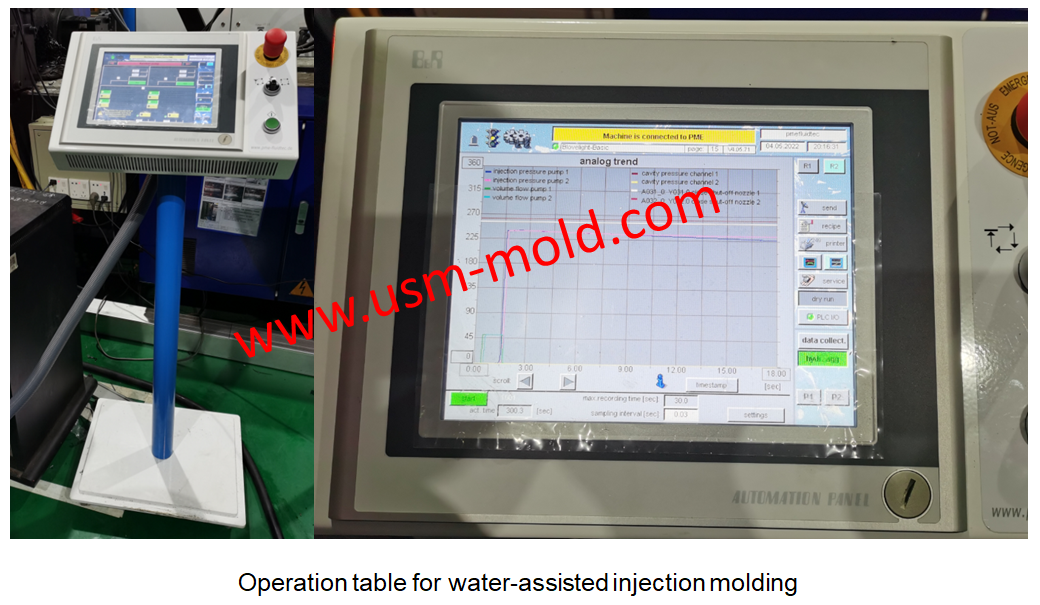
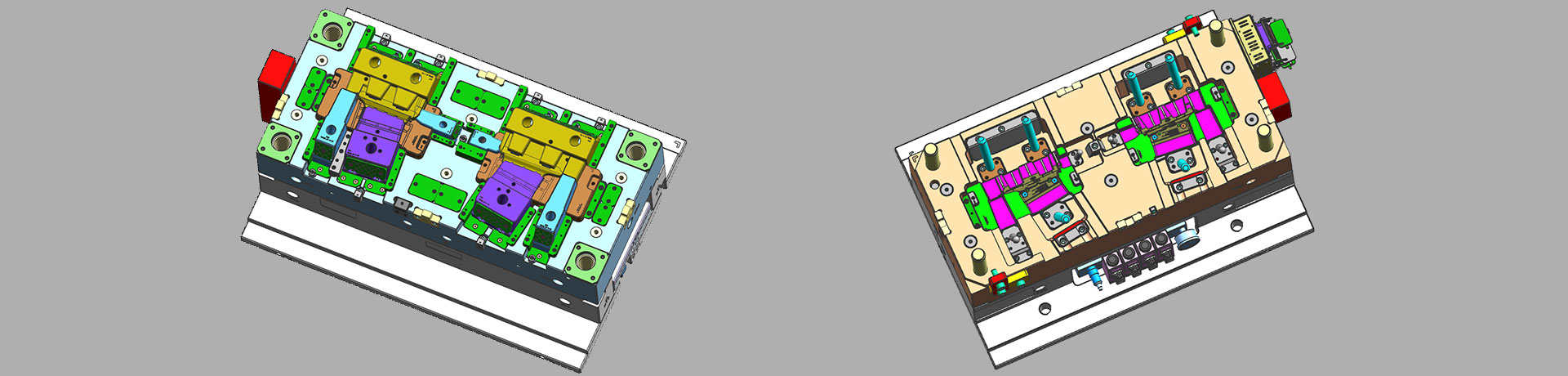
Like the gas-assisted injection molding process, water-assisted injection molding injects a piece of plastic into the mold cavity and core firstly, and then injects water to squeeze the melt plastic back and force the workpiece to form a hollow state. Research and applications have shown that water-assisted parts can make thinner and more even wall thickness parts which means material savings. In addition, comparing to gas-assisted injection molding, water-assisted injection molding can produce larger and smoother inner walls. Comparing with gas-assisted injection molding with nitrogen, the main advantage of water-assisted injection is the rapid cooling efficiency of water, the thermal conductivity of water is 40 times higher than nitrogen, and the heat capacity of water is 4 times larger than gas. For thick-wall parts, the cooling time of water-assisted and gas-assisted can be reduced by 30-70%. The main difference between gas and water is that gas can be compressed but water cannot. The higher viscosity and incompressibility of water make the front end of the water form a solid interface, which acts as a squeezing hammer to hollow out the workpiece, the front side of water also serves to cool the melt filled into the cavity and core.
.png)
The main difference between water and gas is that gas is compressible but the water is not. because of the viscosity and incompressibility of water relative to gas that water can play a role in hollow molding. When the water is injected in a way that the water will not evaporate during the injection, the front side of the water acts like a moving plunger on the melt center of the part. from the front side of the water to the transition section of the melt, the plastic with a thin solidified layer membrane, it is like a high-viscosity core to further push the polymer melt, thereby hollowing out the part, while the water pressure pushes it forward, the water also cools the melt, the gravity or compressed air is used to drain the water from the workpiece and flow into a storage tank fat the end, where the water can be recycled. Water injection moulding can greatly shorten the molding cycle of products, and can be used to produce lightweight and strong hollow products with good appearance effects.
Plastic molding shrinkage rate
Dec 30, 2021Plastic parts getting smaller by shrink, due to the temperature decrease during the molding process, and the shrinkage is expressed by the shrinkage rate, it is common plastic shrinkage rates are...view
Design Tips of Vacuum Venting Mold
Mar 30, 2022There are some regular venting way which are parting surface venting, insert venting, insert pin venting and well-ventilated steel, but there is a special way is vacumm venting, it will need vacumm...view
Water assisted injection molding introduction
May 11, 2022Like the gas-assisted injection molding process, water-assisted injection molding injects a piece of plastic into the mold cavity and core firstly, and then injects water to squeeze the melt plastic...view
Plastic injection mold heating
Feb 16, 2022When the plastic injection molding process requires the mold temperature to be above 80°C, a temperature adjustment system with heating function must be provided in the mold. In addition,...view
Vacuum venting mold design for plastic molded parts
Mar 23, 2022There are some regular venting way which are parting surface venting, insert venting, insert pin venting and well-ventilated steel, but there is a special way is vacumm venting, it will need vacumm...view
The common fixing method of angle pin
May 10, 2024The angle pin is a common part of the drive slider, and the fixing and installation methods as following: 1. Pass through the mold plate directly and press the angle pin with the top plate to fix it,...view